

What Does a Pest Inspection Include at Your Home?
- Peyton Jones
- Jul 17
- 5 min read

A few ants near the kitchen sink or a spider web along the pool cage can feel like a small problem. Sometimes it is. But in Florida, small signs often point to the conditions that let pests keep returning. So, what does a pest inspection include? It includes a careful look at the activity you can see, the hidden access points pests use, and the conditions around your home that may be inviting them in.
A good inspection is not a rushed walk-through followed by a one-size-fits-all spray. It is the starting point for practical protection tailored to your home, your family, and the pest pressure around the property.
What Does a Pest Inspection Include?
A residential pest inspection begins with listening. Your technician should ask what you have noticed, where you have seen activity, when it started, and whether it seems worse at a certain time of day or after rain. Those details help narrow the search. Ghost ants moving across a bathroom counter, for example, call for a different investigation than scratching sounds near the attic or wasps gathering around an exterior fixture.
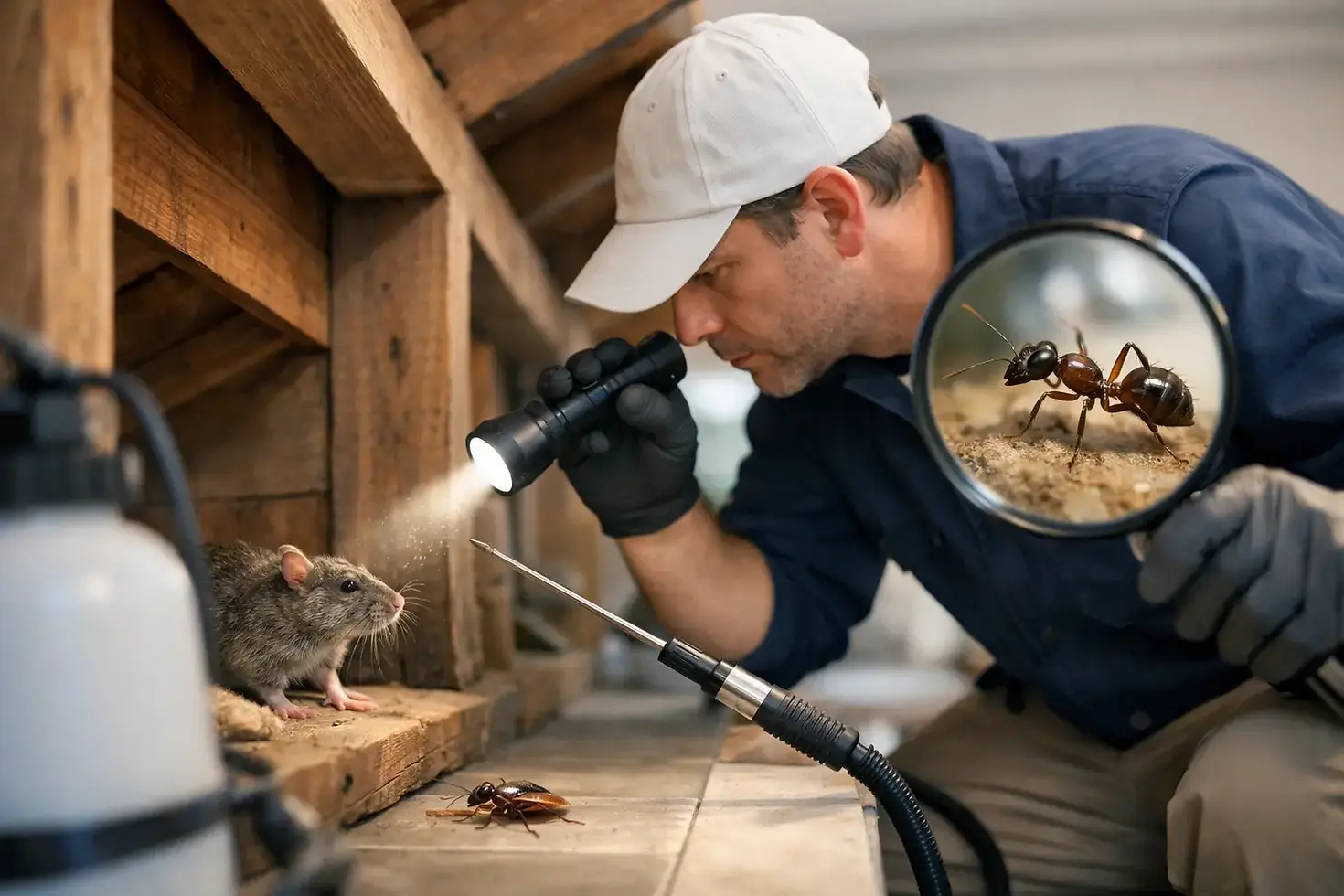
From there, the inspection typically covers the interior, exterior, and surrounding conditions of the property. The goal is to identify the pest, locate likely harborage areas, find entry points, and recommend a treatment and prevention plan that fits the situation.
Interior pest activity and hiding places
Inside the home, an inspector checks the areas where pests are most likely to travel, feed, or settle. Kitchens, bathrooms, laundry rooms, garages, utility closets, baseboards, and areas around plumbing are common places to inspect. Pests are often drawn to moisture, crumbs, pet food, grease residue, stored items, and quiet spaces that are rarely disturbed.
The technician may look for live insects, droppings, webbing, shed material, damaged packaging, nesting material, or trails along walls and cabinet edges. Roaches and ants can hide in remarkably tight spaces, while rodents may leave signs before they are ever seen directly.
Inspection does not always mean pulling apart every cabinet or moving all of your belongings. It means checking the places that offer the strongest clues while respecting your home and your time. If a specific concern requires a closer look, your technician should explain why and let you know what is needed.
Exterior access points and pressure around the home
Most pest issues begin outside. Florida heat, rain, landscaping, and year-round insect activity create constant pressure around a home's exterior. That is why an inspection should include a close look at doors, windows, garage edges, rooflines, vents, utility penetrations, soffits, screens, and cracks along the foundation.
Even a small gap around a pipe or a worn door sweep can become an easy path inside. Inspectors also look at the condition of window screens, weather stripping, and exterior seals. For rodents, they pay special attention to openings around the roofline, garage, attic vents, and utility lines.
The outside inspection also helps determine whether activity is coming from a specific feature of the property. Pool cages, patios, mulch beds, shrub lines, stacked materials, outdoor storage, and trash areas can all create shelter or food sources. A web-heavy pool enclosure may need a different prevention approach than fire ant activity in the lawn or wasps nesting near an entryway.
Moisture, food sources, and conducive conditions
The most useful inspections go beyond finding the pest itself. They identify what is helping that pest stay.
Moisture is a frequent factor, particularly around leaking pipes, air-conditioning lines, exterior faucets, clogged gutters, damp mulch, and poor drainage areas. Standing water is not the only concern. A slow drip under a sink or consistent condensation near an appliance can provide enough moisture to support pest activity.
Food sources matter too. Open pet food, overflowing trash, fallen fruit, unsealed pantry goods, grease buildup around outdoor cooking areas, and bird feeders placed close to the home can add to the pressure. An honest inspection does not blame the homeowner for every pest issue. Many homes experience pests simply because of the climate and surrounding environment. Still, small maintenance changes can make treatment work better and last longer.
Identifying the Pest Before Choosing a Treatment
Different pests require different solutions. Treating every sighting the same way can waste time and may only provide temporary relief.
Ants, for example, may be foraging indoors from an outdoor colony, nesting near moisture, or entering through a narrow gap at a window or door. Roaches may be linked to plumbing areas, appliances, cluttered storage, or exterior harborages. Spider activity can be tied to insect prey, web-friendly corners, lighting, and pool cage conditions. Rodent control requires attention to exclusion as well as trapping or removal.
That is why a technician should avoid making promises before understanding the source and scope of the issue. Sometimes a targeted treatment is appropriate. Other times, recurring quarterly pest service is the better value because it maintains a protective barrier and catches new activity before it turns into a frustrating cycle.
What You Should Receive After the Inspection
A pest inspection should leave you with clarity, not pressure. Once the inspection is complete, you should understand what was found, where the activity appears to be coming from, and what options make sense for your home.
A clear recommendation usually explains the pest concern, the treatment areas, the type of service proposed, and any simple steps you can take between visits. If there is no major active issue, that is useful information too. Prevention service can still be a smart choice for homeowners who want year-round protection, especially in areas with ongoing exterior pest pressure.
Ask whether the proposed products and methods are appropriate for children and pets, what preparation is needed, and when you can expect to see results. Safe, effective service should fit into normal family life as much as possible. You should also know whether follow-up is included and whom to contact if activity continues.
How to Prepare for a Pest Inspection
You do not need to deep-clean your entire home before an inspection. In fact, seeing normal conditions can help a technician understand what is happening. However, it helps to make access available to the areas where you have noticed pests and to point out any specific concerns.
If possible, write down where and when you saw activity. A photo can be helpful when the pest is not present during the visit. Let the technician know about recent leaks, remodeling, new landscaping, pet food locations, or changes around the home. Those details often explain why a problem started or why it keeps returning.
For an exterior inspection, unlock gates when practical and clear away anything blocking access to the perimeter. There is no need to make everything perfect. A dependable local technician is there to assess the property as it is and give you straightforward guidance.
When an Inspection Is Worth Scheduling
An inspection makes sense when you see repeated activity, notice pests in a new area of the home, hear signs of rodents, find droppings, or feel like store-bought products are only working briefly. It is also useful before a problem becomes visible indoors. Exterior pest pressure can build quietly around garages, pool cages, landscaping, and entry points.
For homeowners in Vero Beach and nearby communities, regular inspections can be part of routine home care, much like checking the air conditioner or maintaining the lawn. The goal is not to worry about every insect outside. It is to keep outdoor activity from becoming an indoor problem.
Peyton’s Pest Prevention provides no-cost inspections and practical recommendations built around the needs of each property. A familiar local team can spot the details that matter, answer your questions plainly, and help protect the home your family works hard to maintain.
If something has changed around your home, trust that instinct. Scheduling an inspection early gives you more options, less disruption, and a clearer path back to feeling comfortable in your space.


Comments